_20240923100349.svg)
The packaging sector defines its roadmap to accelerate digital transformation in Catalonia
Presented during the third edition of IN Talks, the BREF Digital Packaging identifies the key technologies and showcases success stories from Catalan companies already driving the sector’s digital transformation.
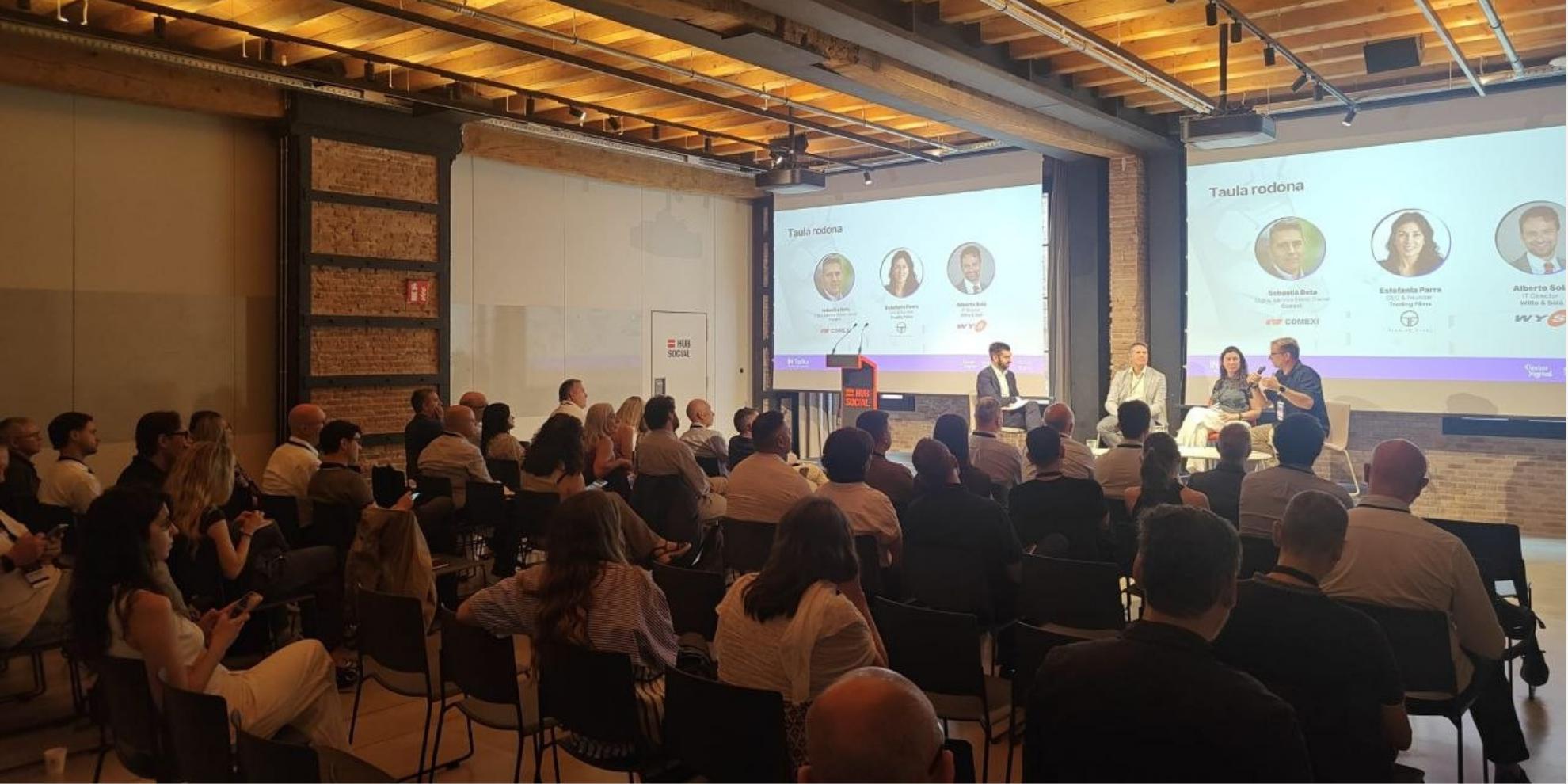
Barcelona, July 9, 2026 – The third edition of IN Talks, held yesterday as part of the BREF Digital Packaging project, brought together companies, industry experts and representatives from the industrial ecosystem to address the main challenges of digital transformation in the packaging industry. During the event, promoted by the Digital Cluster of Catalonia and the Packaging Cluster, with the support of ACCIÓ, the BREF Digital Packaging was officially presented. This reference document outlines the technological priorities needed to strengthen the sector's competitiveness and accelerate the adoption of digital technologies across the packaging industry.
Inspired by the European Best Available Techniques (BAT) reference documents, the BREF provides a practical roadmap to help packaging companies navigate an increasingly complex production environment, new regulatory requirements and the growing need to manufacture in a more efficient, sustainable and connected way.
The three pillars of the digital factory
The document identifies three strategic pillars on which the sector's digital transformation should be built: systems integration, traceability and artificial intelligence.
As companies manage an increasing number of product references, shorter production runs and greater pressure on costs, quality and sustainability, the key challenge is no longer generating more data, but turning that data into actionable information that supports faster and better decision-making.
Systems integration: the first step towards digital transformation
The BREF concludes that digital transformation begins by connecting a company's information systems. Although many organizations already use technologies such as ERP, MES, SCADA and logistics platforms, these systems often operate independently, limiting process visibility and slowing decision-making.
For this reason, the document identifies the integration of business and production systems as the first essential step to eliminate technological silos, automate information flows and build a reliable data foundation on which more advanced traceability and artificial intelligence initiatives can be deployed.
Traceability becomes a strategic necessity
Traceability has evolved from being an internal control tool into a critical digital trust infrastructure in response to the new European regulatory framework, particularly the Packaging and Packaging Waste Regulation (PPWR), applicable from August 2026, and the Digital Product Passport (DPP). These regulations require verifiable data on circularity, material origin and sustainability that can only be efficiently provided through a digitalized environment.
In an industry that manages a wide variety of materials, manufacturing processes and stakeholders throughout the value chain, traceability provides greater operational control, supports better decision-making and strengthens trust between manufacturers, customers and suppliers.
Artificial intelligence: turning data into decisions
The report highlights artificial intelligence as one of the sector's main future drivers of competitiveness, while emphasizing that AI should not be considered the starting point of digital transformation. Its effectiveness depends on the availability of reliable data generated through connected systems and well-established traceability processes. With these foundations in place, AI can help companies optimize production, anticipate potential issues and support more informed decision-making.
Six Catalan companies showcase digital transformation in action
Beyond its strategic recommendations, the document includes six real-world case studies demonstrating how digitalization is already delivering measurable impact across Catalonia's packaging industry:
Comexi demonstrates how machinery digitalization and data analytics improve customer productivity.
LC Paper applies artificial intelligence to optimize processes in the paper manufacturing industry.
Trading Films is implementing a comprehensive digital transformation based on MES, ERP and AI to automate operations and improve decision-making.
Witte y Solà has developed the Sigma project, an AI-based industrial maintenance solution that supports the transition towards a pharmaceutical smart factory.
Font Packaging Group has connected its production plant, machinery and management systems to achieve real-time visibility and strengthen traceability.
Thinex is advancing digital manufacturing and printed electronics to transform physical products into intelligent, data-generating devices.
Together, these examples demonstrate that digital transformation is already delivering tangible improvements in efficiency, sustainability, quality, traceability and competitiveness across Catalonia's industrial ecosystem.
A roadmap to accelerate the sector's digital transformation
Beyond assessing the current state of the industry, the BREF includes a digital priorities matrix together with a four-stage adoption roadmap — Diagnosis, Connection, Scaling and Prediction — enabling companies to plan their digital transformation progressively, prioritize high-impact investments and implement measurable improvements based on clear performance indicators.
According to Joana Barbany, President of the Digital Cluster of Catalonia, and Martina Font, President of the Packaging Cluster, the future of industrial competitiveness depends on strengthening the connection between the technology ecosystem and manufacturing industry. As they state, "The industrial competitiveness of the future will not depend solely on having better technology, but on the ability to connect people, knowledge and ecosystems." This vision encapsulates the ambition of the BREF Digital Packaging project: to foster a more connected, efficient, sustainable and future-ready packaging industry.
Resources
 BREF Digital Packaging -
PDF (2089 KB )
Login to download
BREF Digital Packaging -
PDF (2089 KB )
Login to download